谁和Arib al-Ma'muniyya约会过?
Arib al-Ma'muniyya
ʿArīb al-Ma’mūnīya (Arabic: عريب المأمونية, b. 181/797–98, d. 277/890–91) was a qayna (slave trained in the arts of entertainment) of the early Abbasid period, who has been characterised as 'the most famous slave singer to have ever resided at the Baghdad court'. She lived to the age of 96, and her career spanned the courts of five caliphs.
阅读全文...al-Maʾmun
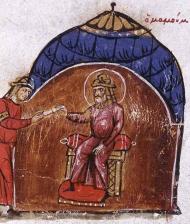
Abū al-ʿAbbās Abd Allāh ibn Hārūn al-Maʾmūn (Arabic: أبو العباس عبد الله بن هارون الرشيد, romanized: Abū al-ʿAbbās ʿAbd Allāh ibn Hārūn ar-Rashīd; 14 September 786 – 9 August 833), better known by his regnal name al-Ma'mun (Arabic: المأمون, lit. 'the Reliable'), was the seventh Abbasid caliph, who reigned from 813 until his death in 833. His leadership was marked by the power and prosperity of the Abbasid Caliphate, al-Ma'mun promoted the Graeco-Arabic translation movement, the flowering of learning and the sciences in Baghdad, and the publishing of al-Khwarizmi's book now known as "Algebra", making him one of the most important caliphs in the Islamic Golden Age. He is also known as a proponent of the rational Islamic theology of Mu'tazilism.
Al-Ma'mun succeeded his half-brother al-Amin after a civil war, much of his reign was spent on peace campaigns. His strong support for Mu'tazilism led him to imprison a Sunni Imam, Ahmad ibn Hanbal in an event that became known as mihna. Al-Ma'mun's foreign policy was due to his decision to continue war and diplomatic relations with the Byzantine Empire, the tension between conflict or diplomacy varying during his military campaigns.
阅读全文...Arib al-Ma'muniyya
Al-Amin
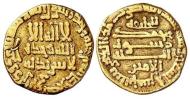
阿布·穆薩·穆罕默德·本·哈倫·拉希德(阿拉伯語:أبو موسى محمد بن هارون الرشيد,羅馬化:Abū Mūsā Muḥammad ibn Hārūn al-Rashīd,787年—813年),尊號阿明(),阿拔斯王朝第6任哈里發。
阅读全文...