谁和大杉 栄,约会过?
Noe Itō 日期为 大杉 栄,,从 ? 到 ?. 年龄差距为 10 年 0 个月零 4 天.
大杉 栄,
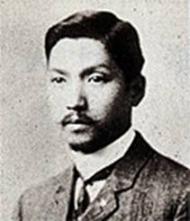
Ōsugi Sakae (Japanese: 大杉 栄; 17 January 1885 – 16 September 1923) was a Japanese anarchist, writer, and social critic of the Taishō period. His thought centered on individualism, direct action, and the "expansion of the ego" as philosophical underpinnings for social and personal revolution. His advocacy of free love and his controversial personal life, which included simultaneous relationships with three women, led to a violent attack against him and his temporary ostracism from the socialist movement.
Born into a military family, Ōsugi was expelled from military school for insubordination and turned to language studies and radical politics in Tokyo. After a series of prison terms between 1906 and 1910, which he considered his "real education," he emerged as a leading voice in the Japanese anarchist movement. Through his journals, such as Kindai shisō (Modern Thought) and Rōdō undō (The Labor Movement), he introduced the works of European thinkers like Peter Kropotkin, Georges Sorel, and Henri Bergson to Japan, synthesizing their ideas into his own philosophy. He became a key figure in the Japanese labor movement, advocating for syndicalism and workers' autonomy while strongly criticizing both state authority and the emerging Bolshevism.
In the chaotic aftermath of the 1923 Great Kantō earthquake, Ōsugi, his partner and fellow anarchist Itō Noe, and his six-year-old nephew were arrested by a squad of military police led by Captain Amakasu Masahiko. They were beaten and strangled, their bodies disposed of in a well. Their murders, known as the Amakasu Incident, became a symbol of state violence against radicals during the period.
阅读全文...Noe Itō
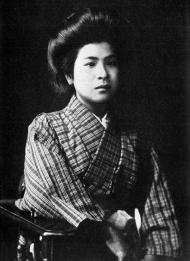
伊藤野枝(1895年1月21日—1923年9月6日)是日本无政府主义者、婦女解放運動家、評論家與作家,出生於日本福岡縣。1923年於關東大地震後的混亂時期,與夫大杉榮及年僅6歲的外甥橘宗一被大日本帝國陸軍甘粕正彦所帶領的憲兵隊所逮捕並殺害後丟棄在古井裡,得年28歲。
阅读全文...