谁和Macalda di Scaletta约会过?
Peter III of Aragon 日期为 Macalda di Scaletta,从 ? 到 ?.
Macalda di Scaletta
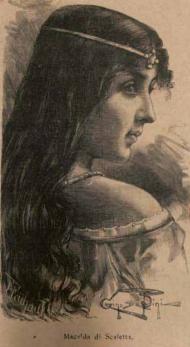
Macalda di Scaletta (or Machalda; c. 1240 in Scaletta Zanclea – after October 14, 1308? in Messina) was a Sicilian baroness and lady-in-waiting during the Angevin and Aragonese periods. The daughter of Giovanni di Scaletta and a Sicilian noblewoman, Macalda was noted for her political conduct, inclination to betray marriage (political and human), and for her promiscuous sexual habits; because of this dissoluteness, even having a brush with "suspicion of incest," tended to morph into an "exhibitionism veined with nymphomania." She was the wife of the Grand Justiciar of the Kingdom of Sicily, Alaimo da Lentini.
Reportedly ambitious, judicious, and educated in matters of the military, Macalda deployed her influence first in the circle of Charles of Anjou and then at the court of Peter III of Aragon, whom, according to a chronicler of the time, Macalda tried to seduce, but without success. She lived in a time of upheavals in the Kingdom of Sicily, which were marked by the bloody revolt of the Sicilian Vespers, and which led to the change from Angevin to Aragonese rule.
Practicing intrigue at court, but also vying with Queen Constance of Hohenstaufen, Macalda had a role in at first favoring, and then toppling, the political fortunes of her second husband, the Alaimo da Lentini, who had been one of the major champions of the Sicilian Vespers.
Macalda's career has left behind a recognizable historical trace, though variously treated in the chronicles of her time. One of these, the Historia Sicula by the contemporaneous Messinese chronicler Bartholomaeus of Neocastro, is aggressive towards her character, but some suspect that the political motives influencing the pro-Aragonese Neocastro may not have been the only factor in his bitterness towards Macalda, and that he was "one of the victims of the woman's spell."
Besides her military education, Macalda is also noted for her ability to play chess, which was unusual for a woman of her time, and historical evidence suggests that she was probably the first person in Sicily who learned how to play it.
Her singular figure, inhabiting the pages of chronicle and history, is transfigured in the collective memory, in folklore, and in the collective imagination. Macalda became the protagonist of popular traditions, myths, and legends of Sicily, such as one in Catania about the well of Gammazita.
A distant echo of Macalda's passion for the Aragonese sovereign, which the chronicler Neocastro disseminated in caustic tones, also seems to reverberate in Boccaccio's storytelling, with an enormous difference of tones and accents, in a much more idealized and rarefied courtly and knightly context in the Decameron: the tale of Lisa Puccini's love for King Peter of Raona (Aragon).
阅读全文...Peter III of Aragon
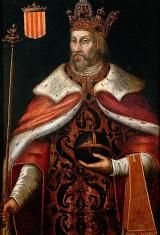
佩德羅三世(亞拉岡語:Pero lo Gran;加泰羅尼亞語:Pere el Gran;西班牙语:Pedro III de Aragón,1239年-1285年11月11日),亞拉岡國王及巴塞羅那伯爵(1276年-1285年在位),西西里國王(1282年-1285年在位)。
佩德羅三世為亞拉岡國王海梅一世與第二位妻子匈牙利的尤蘭(匈牙利國王安德烈二世與第二位妻子尤蘭德·德·考特尼的女兒)的長子,出生於華倫西亞。佩德羅年少時參與父親海梅一世的收復失地運動對抗摩爾人從而得到不少的軍事經驗。1276年,父親海梅一世臨終時決定將領土分封給兩個兒子(長子佩德羅得到亞拉岡本土,次子海梅得到巴利阿里群島、蒙彼利埃和大陸上的幾個縣)。
1262年,佩德羅三世與西西里國王曼弗雷德的女兒康絲坦斯結婚,但是1266年曼弗雷德在貝內文托戰役戰死,西西里王國被安茹的查理所奪去,稱為西西里國王查理一世。
1282年,在西西里晚禱事件後,安茹的查理被推翻。佩德羅三世接受西西里人的邀請,前往西西里就任國王。但是法蘭西籍教皇馬丁四世只承認查理為西西里和那不勒斯的國王,查理也乘機向佩德羅三世提出在波爾多決鬥的挑戰,佩德羅三世準時到達了決鬥地點,而查理卻缺席不到,佩德羅三世自然贏得了勝利,教皇馬丁四世將佩德羅三世開除教籍,並給亞拉岡停止聖事的處罰,廢黜他的王位,解除臣民對他的效忠宣誓。馬丁四世還將亞拉岡的王位交給了法蘭西腓力三世的次子瓦盧瓦的查理。瓦盧瓦的查理發動了對亞拉岡的阿拉贡十字军。佩德羅三世在西西里的冒險行動在亞拉岡也不得人心,貴族們利用這一機會組織聯盟,來保衛自己的特權。
1283年,佩德羅授予他們所謂的廣泛特權,即承認他們的習慣法,每年在薩拉戈薩召開一次御前會議。法蘭西國王腓力三世一心想讓他的兒子當亞拉岡國王,派軍隊入侵亞拉岡,但是因為戰敗和瘟疫等原因,不得不撤軍。
佩德羅三世身材高大,臂力過人,而且精力充沛,至死仍在治理西西里,但是他死後,關於西西里的歸屬卻模糊不清。兩個兒子阿方索三世和海梅(義大利語:賈科莫)分別繼承了亞拉岡王國和西西里王國。
阅读全文...